
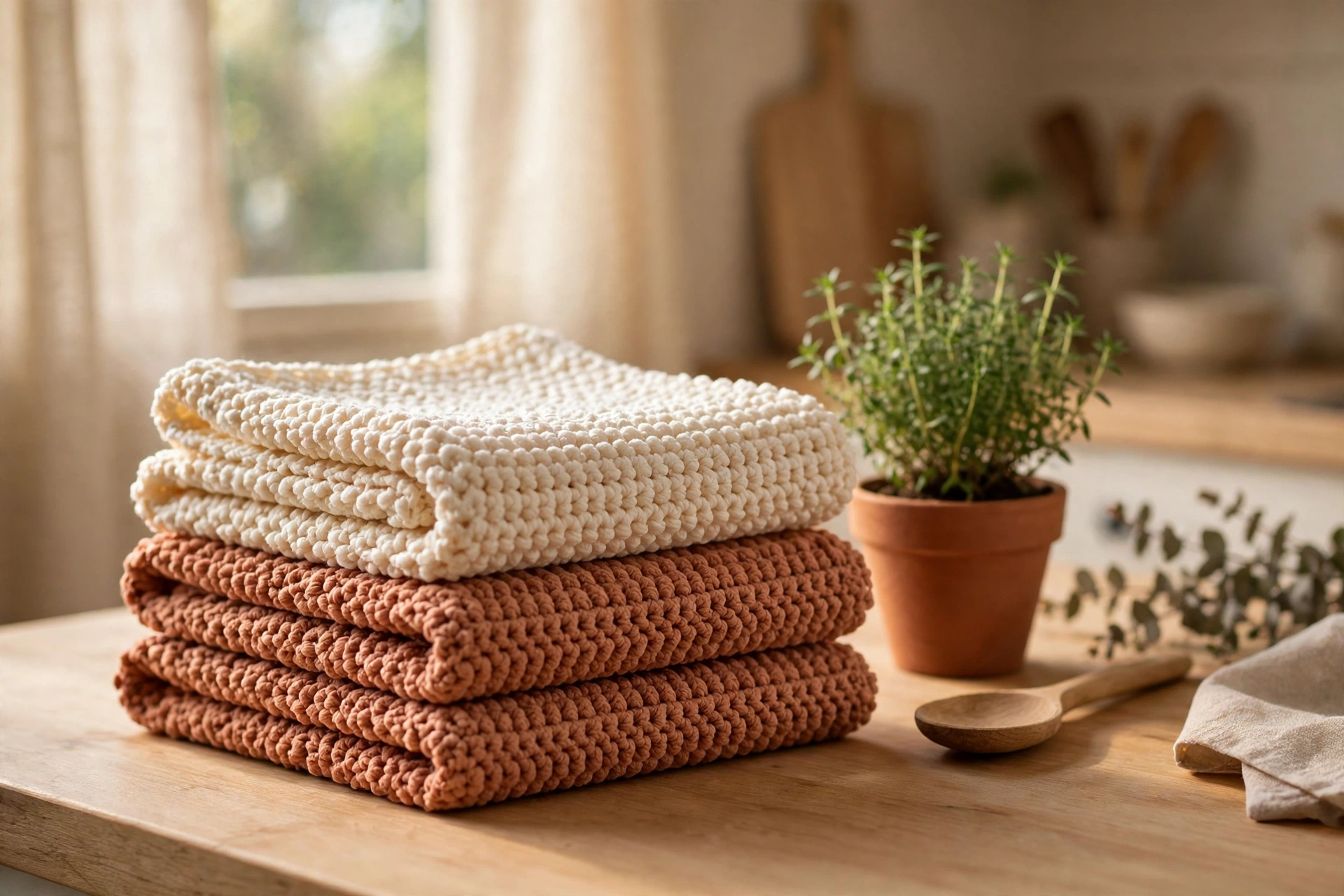
Easy Crochet Dishcloth Pattern (Free Beginner Tutorial)
If you’re looking for a first crochet project that actually gets used every single day, this is it. A handmade dishcloth is small enough to finish in one evening, forgiving enough for brand-new hands, and useful enough that you’ll soon want a whole stack of them by the sink. This crochet dishcloth pattern uses just one simple stitch repeat — the lemon peel stitch — which creates a thick, nubby texture that scrubs well and soaks up spills beautifully.
There is no shaping, no complicated counting and no fancy stitches. If you can make a single crochet and a double crochet, you already know everything this pattern needs — and by the time you finish, you’ll have practised both stitches dozens of times without it ever feeling like homework.
About This Pattern
Skill level: Easy — confident beginner
Finished size: Approx. 9 × 9 inches (23 × 23 cm)
Time to make: About 2–3 hours, or one relaxed evening
Terms: US crochet terms throughout
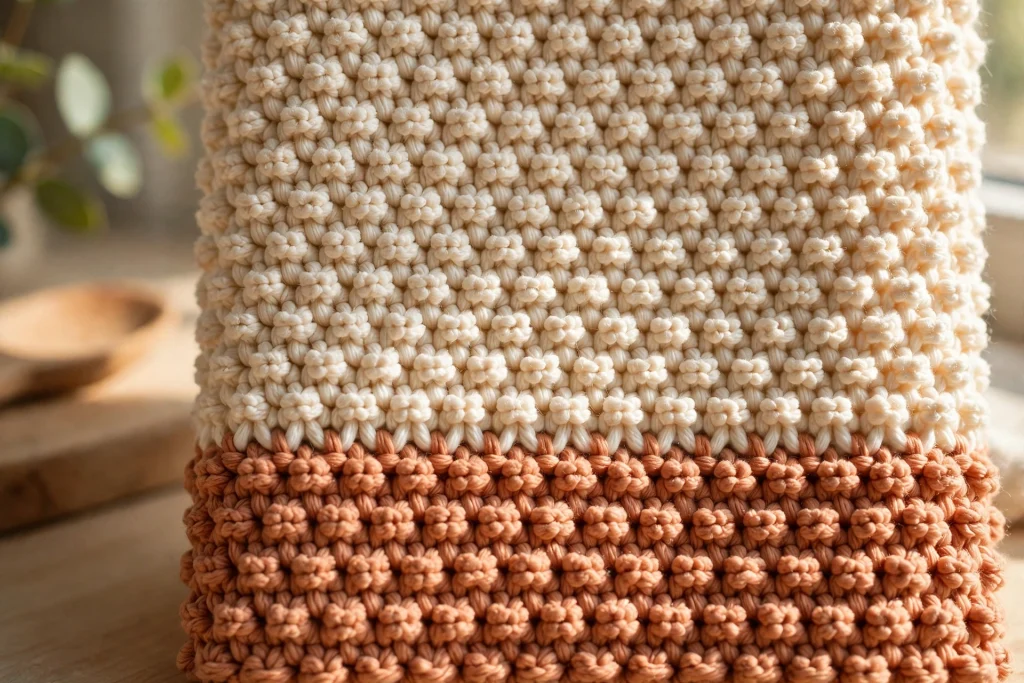
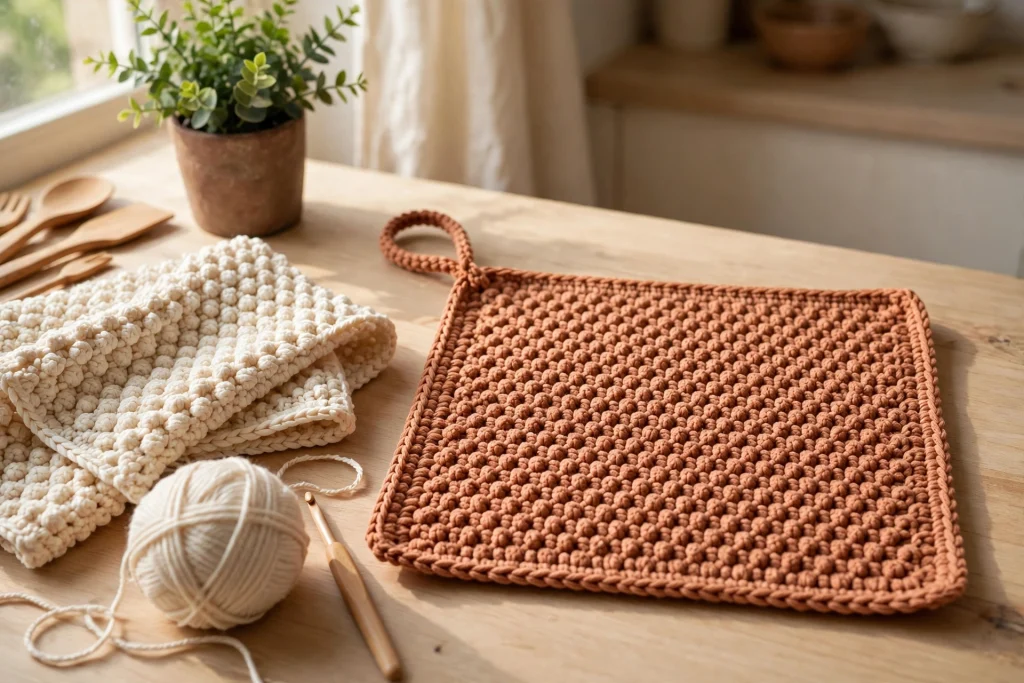
The stitch is called lemon peel (you may also see it called griddle stitch): you simply alternate one single crochet and one double crochet across every row. That little alternation is what gives the cloth its lovely pebbly texture — and because the pattern is only two repeating rows, it’s easy to memorise after the first few.
Materials You Will Need
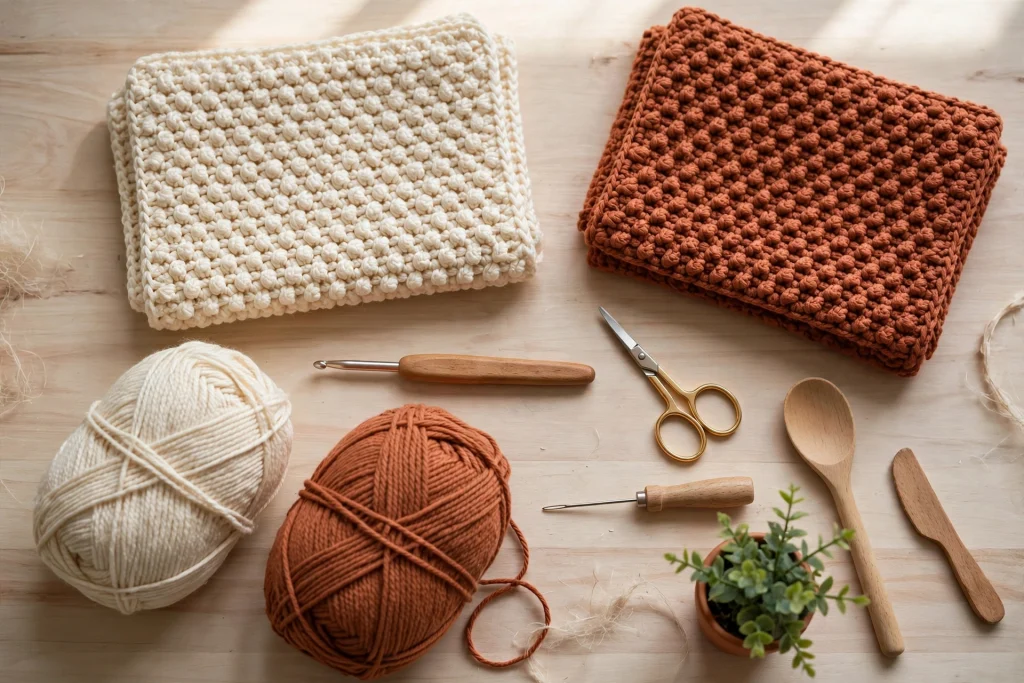
- Yarn: 1 ball of worsted-weight (category 4) 100% cotton yarn, about 90–110 yards — kitchen cotton is ideal
- Hook: US H-8 (5.0 mm) crochet hook
- Yarn needle with a large eye, for weaving in ends
- Scissors
- Stitch markers (optional) — handy for marking your first and last stitch while you learn
Why cotton? Cotton absorbs water instead of pushing it around, it doesn’t melt near heat, and it survives endless hot washes. Acrylic yarn is fine for practising the stitch, but for a cloth that will actually work in your kitchen, cotton is the right choice every time.
Stitches & Abbreviations
ch = chain · sc = single crochet · dc = double crochet · sl st = slip stitch · st(s) = stitch(es) · rep = repeat
A quick refresher on the only two real stitches here: for a single crochet, insert your hook, pull up a loop, yarn over and pull through both loops. For a double crochet, yarn over first, insert your hook, pull up a loop, yarn over and pull through two loops, then yarn over and pull through the last two loops. That’s the whole pattern — everything else is just repeating them in turn.
Before You Start
A few honest notes that will save you frustration. Gauge is not critical for a dishcloth, so don’t stress about matching it exactly — a slightly bigger or smaller cloth still washes dishes perfectly. Keep your tension relaxed and even; tight stitches make the alternation harder to see. Most importantly, count your stitches at the end of each row: you should always have 31. The ch-1 at the start of each row does not count as a stitch. If your count changes, you have almost certainly missed the first or last stitch of a row — it’s much easier to fix one row back than ten.
The Pattern
Setup: Ch 32.
Row 1: Sc in the 2nd ch from your hook, *dc in the next ch, sc in the next ch; rep from * across. (31 sts)
Row 2: Ch 1, turn. Dc in the first sc, *sc in the next dc, dc in the next sc; rep from * across. (31 sts)
Row 3: Ch 1, turn. Sc in the first dc, *dc in the next sc, sc in the next dc; rep from * across. (31 sts)
Rows 4–28: Rep Rows 2 and 3 alternately until your cloth measures about 9 inches from the starting edge — roughly 28 rows in total. End after either a Row 2 or a Row 3; both work fine before the border.
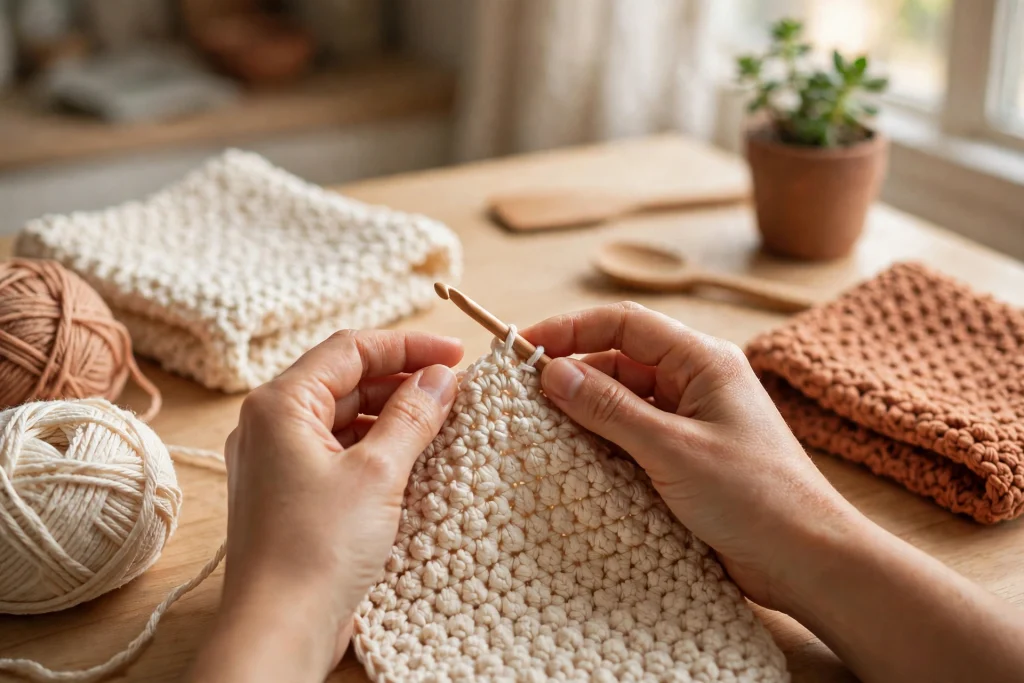
Notice the simple rule hiding inside the rows: a single crochet always sits on top of a double crochet, and a double crochet always sits on top of a single crochet. Once you see that, you don’t even need to check which row you’re on — just look at the stitch below and do the opposite.
Want a different size? Start with any even number of chains and you will always end up with an odd stitch count, which is all this stitch needs. Fewer chains for a small washcloth, more for a hand towel — then work rows until your piece is the length you want.
The Border & Hanging Loop
A border tidies the edges, stops any curling, and gives your cloth a finished, shop-bought look. Don’t turn your work after the last row.
Border: Ch 1. Starting at the corner nearest your hook, work sc evenly all the way around your cloth: 1 sc in each stitch across the top and bottom edges, 1 sc into the end of each row down both sides, and 3 sc in each corner so the corners lie flat. Join with a sl st to the first sc.
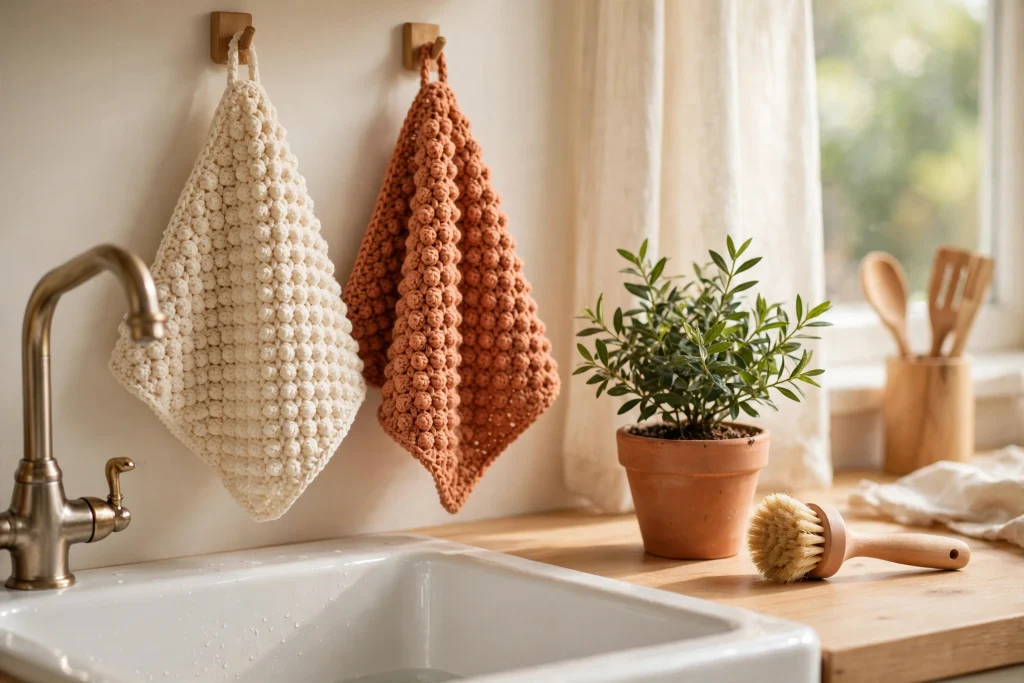
Optional hanging loop: If you’d like a loop for hanging your cloth by the sink, don’t fasten off yet. At a corner, ch 12, then sl st back into that same corner stitch to form a loop. Fasten off, leaving a tail of about 6 inches.
Finishing & Care
Weave in both ends with your yarn needle, running each tail back and forth through the stitches in two directions so it can’t work loose in the wash. If your cloth looks a little wavy, lay it flat, dampen it lightly and leave it to dry in shape — cotton settles beautifully.
To care for your cloths, simply machine wash with your towels and dry flat or in the dryer. Homemade cotton dishcloths soften with every wash and easily outlast a packet of disposable sponges — most makers find one cloth lasts a year or more of daily use.
Easy Variations to Try Next
Simple stripes: Change colour every 2 rows for a classic kitchen look. Fasten off at each change and weave the ends in, or carry the yarn neatly up the side — the border will hide the carried strands.
A matching set: Make three cloths in your kitchen’s colours, stack them, and tie the bundle with twine. They make a genuinely lovely housewarming or hostess gift, especially paired with a bar of nice soap.
Washcloth size: Start with 26 chains and work about 22 rows for a smaller face or baby washcloth in the softest cotton you can find.
Quick Questions
Why are my edges curling? Almost always tension — you’re not doing anything wrong. The border round plus a light flattening while damp fixes it, and the first wash settles the rest.
Can I use acrylic yarn? For practice, yes. For a working dishcloth, no — acrylic doesn’t absorb water and can melt against a hot pan, so save it for other projects and use cotton here.
My stitch count keeps changing — help! The most common culprit is the last stitch of the row, which likes to hide. Count every few rows, use a stitch marker in your first and last stitch for a while, and remember the golden rule: 31 stitches, every single row.
Your Turn
That’s everything you need: one ball of cotton yarn, one easy stitch, one evening. Make your first cloth in a solid colour while you learn the rhythm, then raid your yarn basket for stripes. Browse our other DIY & garden projects for more handmade inspiration, and if you enjoyed working with your hands, our easy DIY wall decor ideas are the perfect next weekend project.
📌 Save this pattern on Pinterest so this crochet dishcloth pattern is always one tap away when the yarn basket calls.
